 |
|
|
Hubert Damisch, 'L'œil théoricien',
translated from the French by Anthony Auerbach.
Translator’s note: The following article was published on the occasion of an exhibition of works by Josef Albers (1888–1976) in a small town in northern France in the centenary year of the artist’s birth. Tourcoing had recently become the twin town of Bottrop, Albers’ birthplace in the Ruhr region of Germany and home of the Josef Albers Museum, the principal lender to the exhibition. Hence the unlikely venue for the meeting of an artist whose career spanned the vicissitudes of modernism, first in Europe, then in America, and Hubert Damisch (1928–), an art historian who has helped define the scope of his discipline.
Both—the one in painting, the other in writing—issue a challenge to art history, its theories, its methods and their limitations. Albers insisted theory comes after painting, from trial and error. For Albers, the work of art was indeed thinking, and painting a situation to think in. For Damisch, writing traces thinking in painting, works it out, weaves with its threads a text, a theorem. In the essay on Albers, Damisch approaches not only his object but also his instrument, in so far as Damisch thinks through Albers. For Damisch, moreover, art history means thinking through what comes after, that is to say, theory.
Original publication: Hubert Damisch, ‘L’œil théoricien’ in: Josef Albers, Tourcoing: Musée des Beaux Arts, 1988, 11–17, catalogue of the exhibition curated by Evelyne-Dorothée Allemand, held at the Musée des Beaux Arts, Tourcoing, 30 January–3 April 1988.
References to the relevant English publications are provided. The translator’s additions to Damisch’s notes are indicated with square brackets. Damisch's article did not include specific references to the works illustrated in the exhibition catalogue. A few illustrations of Albers’ work have been added.
I am grateful to Hubert Damisch for his permission to publish this translation and to Teri Wehn-Damisch for her kind assistance. I would like to thank Brenda Danilowitz, Chief Curator of the Josef and Anni Albers Foundation, for helping with material from the Foundation’s archive and the images presented with this text.
This translation was first
made for a seminar at Jan
van Eyck Academie in
2008. It is published in the
Journal of Art Historiography, no.
5, December 2011.
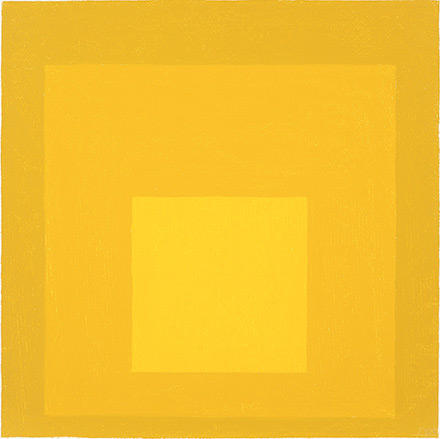
Figure 2: Josef Albers, Study for Homage to the Square, 1966. Oil on masonite, 40.6 x 40.6 cm: private collection. Copyright: The Josef and Anni Albers Foundation (1976.1.187).
The eye, the most theoretical of all
the senses.
Karl Marx, 1844 Manuscripts [note
1]
 Contrary to received opinion, Freud’s respect for artistic types was not unqualified. ‘Meaning is but little with these men, all they care [for] is line, shape, agreement of contours. They are given up to the Lustprinzip.’ [note 2] This judgement, reported by Ernest Jones, does not necessarily belie the interest the founder of psychoanalysis showed in artists such as Leonardo da Vinci, Michelangelo and even Signorelli, who enjoy a truly exceptional status in our culture. The nuance of contempt it implies (that seemed to justify the fascination with ‘pure visibility’ among the German aestheticians of the end of the [nineteenth] century that Benedetto Croce denounced around the same time) could just as well go hand in hand with a poorly disguised envy. Neither Leonardo’s personality, the Orvieto frescos, nor the figure of Moses would have held Freud’s attention for long, or awoken in him an echo, be it unconscious, were it not for the enigma which they posed to him. An enigma which was not a matter of lines, forms or contours (as for colour, Freud did not breathe a word about it in his letter to Jones), but whose scope was measured out for him in terms of meaning [signification], and moreover in terms of the Reality Principle, in so far as it was [an enigma] susceptible of interfering with his own history, his own past, his own obsessions, his own neurosis. Contrary to received opinion, Freud’s respect for artistic types was not unqualified. ‘Meaning is but little with these men, all they care [for] is line, shape, agreement of contours. They are given up to the Lustprinzip.’ [note 2] This judgement, reported by Ernest Jones, does not necessarily belie the interest the founder of psychoanalysis showed in artists such as Leonardo da Vinci, Michelangelo and even Signorelli, who enjoy a truly exceptional status in our culture. The nuance of contempt it implies (that seemed to justify the fascination with ‘pure visibility’ among the German aestheticians of the end of the [nineteenth] century that Benedetto Croce denounced around the same time) could just as well go hand in hand with a poorly disguised envy. Neither Leonardo’s personality, the Orvieto frescos, nor the figure of Moses would have held Freud’s attention for long, or awoken in him an echo, be it unconscious, were it not for the enigma which they posed to him. An enigma which was not a matter of lines, forms or contours (as for colour, Freud did not breathe a word about it in his letter to Jones), but whose scope was measured out for him in terms of meaning [signification], and moreover in terms of the Reality Principle, in so far as it was [an enigma] susceptible of interfering with his own history, his own past, his own obsessions, his own neurosis.
Josef Albers is without any doubt, among modern artists, the one who would seem to correspond the best, the most explicitly, the most deliberately, with Freud’s characterisation: disregarding every consideration of representation or of expression, did not this artist, usually seen as the product par excellence of Bauhaus ideology, set himself the programme of working, as both painter and teacher, on the development of a veritable, but strictly experimental, culture of the eye, supposed to lead, as he said about colour, to an increase of pleasure [un plus de plaisir] (‘its greatest excitement’ [note 3]), beyond received rules and canons? [note 4] To this end, a good part of Albers’ work, and still more of his teaching, was brought to bear precisely on colour considered in and for itself. But the neglect of colour among the formal components of art would not be surprising on the part of someone like Freud, who always insisted, not without some complacency, indeed with a barely hidden feeling of superiority, that he was not, himself, a ‘visual’ type and that words were his natural element.
Albers could well hold, in his pedagogical work on colour, to apparently empirical procedures, founded on trial and error. Doubts about the basis of his teaching, and the various forms of resistance which were aroused among his students by the experiments to which he subjected them, convinced Albers very early on that the preferences that everyone shows for some colours and the aversion others can produce, beyond being an obstacle to the just appreciation of the relations of value or intensity between various tones, are underwritten in the register of the drives. At the beginning of the year, when he happened to observe the repugnance that a student experienced in working with a certain colour, he did not hesitate to force the student to work with that colour systematically until the hatred turned to love, which never failed to happen. [note 5] There is a comparable note of mischief in such a method of teaching and in an art that is essentially cunning. But, if ruse there is, in this case, it owes nothing to dissimulation—painting making its whole operation visible—and anticipates more long-term effects, but also more profound effects than could be attained simply by formal exercises: effects which suffice to confer on Albers’ teaching its true stature, since they belong to a properly analytic work, connected with the individual history of a subject.
The assertion according to which artists couldn’t care less about meaning [signification] and pay heed, in what is nonetheless their work, only to the Pleasure Principle, needs to be modified in the case of Albers, despite the fact that the ruse I just mentioned itself tends towards an increase of pleasure. Albers’ teaching seems rather to confirm, a contrario, the link that can be traced in Freud between ‘meaning’ [signification] and the Reality Principle: a formal practice which excludes the condition of meaning [sens] would be bound to illusion [leurre], and, in the absence of the recourse representation offers, condemned to get wrecked on it. What we see is not what we see: [note 6] the well-known experiment in which two small rectangles of the same colour presented on different coloured backgrounds appear dissimilar suffices to show the gap which can exist between the physical fact of colour and its perceptual appearance, or, as Albers calls it, its ‘psychic effect’. That the respective tonalities of the two rectangles can, under certain conditions, appear ‘“incredibly” different’ [note 7] demonstrates the power of the effect of context when it comes to colour: a power comparable to that of the most effective ‘optical illusion’ [trompe l’œil] such that it is impossible to extract oneself from the deception [leurre] even when one is averted to it. But that would still amount to nothing if art, to believe Albers, did not begin precisely there, if art did not have its origin in the very discrepancy between the physical fact (‘reality’) and the effect designated as ‘psychic’. [note 8] Would painting have broken with representation only to amuse itself with illusionistic games [jeux illusionistes], perhaps pleasant, but strictly optical and without any grip on reality?
This question would not get any really satisfactory response within the language of art criticism or art history. Does that mean that we ought to borrow that of psychoanalysis without further precautions (which would justify the reference to Freud’s text), or appeal directly, as Robert Le Ricolais would wish, to the language of topology? [note 9] That these two languages are not mutually exclusive, and that the ‘geometric intuition’ of which Poincaré speaks [note 10] is at work in both is demonstrated by the work of Lacan (which—has it been repeated often enough—makes a particular point of this proposition), as much as by the work of that unclassifiable character—not really an architect, not really an engineer—Le Ricolais. The attention given, in Le Ricolais’ terms, to that which happens on the side [note 11] should not, for all that, lead to depriving an œuvre like Albers’ of its characteristic property, testimony, as Mondrian’s was before, to a proposition no less peculiar than this very ‘geometric intuition’ advanced in the pictorial field.
To convince oneself that the work of painting can borrow from operations of this kind, which cannot be thought only in strictly regional or ‘artistic’ terms, one need only consider the work the painters of the Renaissance achieved, in their time, under banner of perspective, and the shift which perspective produced in modern mathematics. One would be tempted to say that Albers’ project goes back to that of the perspectivists on one point, if the formulation—to take it literally—were not immediately open to question. If it is correct to say that Albers’ art appeals directly to the subject, [note 12] the whole question remains as to the status assignable to such a ‘subject’, as much as to the conditions under which painting comes to implicate it in its game: the conditions which, for all that they are no longer those of linear perspective and of the point on which it depends as if on its ‘origin’, are part of it no less than they belong to a kind of geometry, albeit one which would have, as we will see, nothing punctual about it anymore, nor even, at the limit, anything linear.
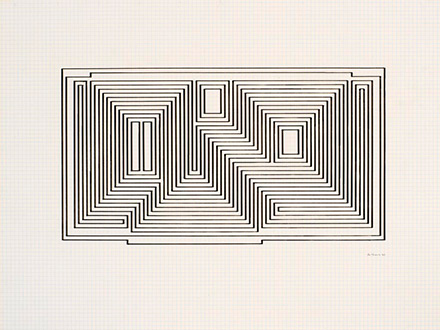
Figure 1: Josef Albers, Graphic Tectonic Drawing I, 1941. Pen and ink on wove graph paper ruled in blue, signed and dated lower right ‘Albers 41’, 43.2 x 55.9 cm. Bethany, CT: The Josef and Anni Albers Foundation. Copyright: The Josef and Anni Albers Foundation (1976.3.200).
Even so, Albers tested the effects he aimed for in his work in the graphic domain [l’ordre graphique], consequently in linear mode, as well as in the field of colour [l’ordre chromatique]. To begin with the series Graphic Tectonic of 1942–44 [Fig. 1, above], which itself follows from some variations on what one mathematician—I am borrowing Pierre Rosenstiehl’s idea—would call ‘crazy plane curves’. [note 13] Far from being ‘crazy’, these abstract constructions, realised by means of closed lines, continuous or discontinuous, nested or, otherwise intersecting at right-angles, constituted as they are of horizontal and vertical segments of different thickness and whose configuration in ‘packets’ produce sometimes surprising surface- and volume effects, even in their simplicity—these constructions were controlled by an underlying constraining grid, as were, in the domain of colour, the Variants [1947–c. 1960] and, indeed, the series Homage to the Square [1950–1976, Fig. 2, top of page]: space, as Le Ricolais says, can present a variable typographic density, without having any less of an ordered structure. [note 14] The essential thing is that the controlled oscillation between the surface effects and three-dimensional effects, as between those of relief and of depth, is played out only in the two dimensions of the plane, the diagonal—by which, in perspective construction, the incidence of the third dimension is indicated—being never materialised, but only suggested.
The diagonal (or the oblique, which is its image in perspective) intervenes on the other hand in the series Transformations of a Scheme [1949–53] as well as the Structural Constellations [c. 1950–60]—not to mention the Bi-Conjugates [1943], which owe their method to painting—whose effectively bipolar configuration combines two apparently analogous motifs which one would say are constructed in axonometric perspective, but of which one seems to come forward and the other recede with an effect that presents itself like a fold or a flexure of space, though one cannot locate it exactly. This configuration, which makes the figure work in the very thickness of the plane, [note 15] while proposing, by means of a subtle displacement of lines, the best illustration of the concept of volume understood as transition [passage], under the influence of a kind of ‘crystallisation’, of the plane into space, [note 16] has the paradoxical effect of blocking the reflexive relation, itself bipolar, from which proceeds the privilege assigned to the classical ‘subject’ which would have it that my representations (even if they proceed from an illusion [leurre]) belong to me, because I perceive. [note 17] The recourse to the appearance of axonometric perspective, which escapes—even, as it is here, turned against itself—from the constraint of a point of origin, suffices to dissipate, at the price of a calculated figurative ambiguity, the equivocality which stems from the introduction in this context of the notion (in the last analysis grammatical) of the subject: neither the eye, nor the soul (to suppose as Descartes would, that it is the soul which ‘sees’, and not the eye) can master the oscillations and interferences, the transitions [passages] which are produced in the plane, and which are produced there in the sense of a Vorstellung, of a performance, with all the dramatic and sensory connotations which stick to it. Keine Welt hat kein Theater: there is no world—which is as good as to say there is no subject—without theatre. [note 18] All this is to measure the consequences and the implications—pictorial as much as philosophical—of representation being inscribed in the two dimensions of the plane, without the ability to overturn its constraints by appealing in one way or another to projection.
In the plane thus unconstrained by a point designated as ‘origin’, and thus given over to its own activity and dynamic, the actors that are the figures or volumes are susceptible of losing or changing their identity as well as their positions. So it goes too, in the field of colour: the phenomena that Albers studied under the rubric of the interaction of colour—such as the variations of identity, value or chromatic intensity under the influence of context, the effects of contour, transparency, folding, intersection or superposition, indeed of weaving (such that a colour appears to pass over or below another like the threads of taffeta)—which are produced in the plane (and in its thickness) simply from the juxtaposition of coloured patches—to say nothing of the recession or pushing forward of colours with which the series Homage to the Square [note 19] plays systematically: all these phenomena or effects clearly make no sense unless connected with the experience of a subject: concrete, subjective experience one would be tempted to account for in psycho-physiological terms [note 20] if such an approach would not lead, necessarily, there again, to obliterating what I called the activity of the plane, while masking [faisant écran à] the function which might be that of illusion [leurre] (if that is the right word) in the elaboration of new forms of writing. A writing essentially transitive in its operation, in that it plays at the junction of several supposedly heterogeneous fields which borrow a semblance of common measure from it.
At their limit, the experiments Albers conducted on colour escaped the constraints of linearity, as his graphic experiments escaped those of the point. In contrast with the paper cut-outs of Matisse, which are, according to the painter, a way of drawing in colour—the work of marquetry, albeit fake marquetry—what Albers’ painting leads to, as much as the work he imposed on his students, is putting into play forms (a square, perhaps) so simple, so elementary, so ‘weak’ that thinking in colours [la raison de la couleur] carried it, in the event, over to thinking in lines (to the point, as has been said, that an appearance of a contour can emerge, can produce itself, at the junction of two coloured patches—the contour, to which, as Alberti would have it, colour owes its thinking [raison]). The reference to marquetry is decisive here, not so much for the analogy it suggests with the work of perspective, but because it forces the abandonment, as Wittgenstein clearly saw, of the atomistic conception of colour: [note 21] colour does not in any case lead to units identifiable as such outside the context in which they occur; it’s a matter of a language game from which proceeds the idea of a grammar, or a logic, indeed of a geometry of colour (in the Wittgensteinian sense); [note 22] or, it’s a matter of the experiments with chromatic interaction Albers proposed to his students and to which his own painting gives a properly aesthetic scope, but whose heuristic component is no less evident.
If the idea, if the project of a geometry of colour is acceptable, one would say, in this case, that experience could only verify what ought to be deducible in purely conceptual terms: to parody Poincaré, one cannot do geometry with pigments any more than one can do it with chalk. However, that would be to ignore the important results which are available on the matter for which one is indebted to painting (as witness Wittgenstein’s text): results which are not only empirical, or experimental, but which could lend themselves to a conceptual turnaround analogous to that which the work of the renaissance perspectivists produced in modern geometry. This much is true, in both cases, that painting thinks, but in painters’ terms and according to painters’ ways. [note 23] Albers pedagogic practice is testimony to the gap which separates speculation pursued in the light of painting from any kind of experimental psychology: I need only mention in this regard the substitution of the factual fact, which corresponds to the supposed sense-data, with the actual fact, that one discovers when one asks oneself what one really sees [note 24] and which obeys binding, objective laws, which suffices to elude the ever recurring opposition between being and appearance, reality and illusion [leurre]; [Albers’ pedagogy affirms] the critique of the definition of colour as pure presence, in which it turns out to be a matter of difference down to its temporal condition (the ‘after-image’ effect etc.); [he makes] only allusive reference to physical and psychological theories of colour; and calls, for example, in connection with the mixing of colours, [only] on mental experience. Thus Albers did the work of a phenomenologist, in the sense Wittgenstein as well as Merleau-Ponty understood it. [note 25]
But this would count for nothing if Albers’ pictorial practice had not led him, by a kind of necessity, following the internal logic of the very work of painting, to recognise the properly scriptural dimension of colour: the idea that the distance, indeed, the interval between colours can be expressed in terms of limit, which is nothing but another form of spacing, a transformed spacing, and spacing, in turn, another form of limit, something like an ‘extended’ limit, whose effect could be translated into a diagram; the hypothesis according to which the eminently geometric operation of displacement provides a good instrument to measure the difference between colours; [note 26] the recurrent analogy between colour-space [l’espace chromatique] and the link, duly noted, between colour and extension [note 27] (even if the philosophers have the tendency to define it in intensive terms [note 28]): these traits, among many others, allow us to glimpse what might be not simply a colourful writing, but one which would borrow directly from colour, from its geometry as well as its economy. The ‘pressure’ [poussée] [note 29] of colour, and the ‘constancy’ of this pressure, the interaction between colours thought in terms of excitation and inhibition, suffice to justify the displacement towards analysis in terms of drives that the reference to psychoanalysis called up at the start, as well as the idea, dear to Albers, of a Gestaltungstrieb, [note 30] a form drive, or better said, a formation drive, an information drive: with this small reservation, again, that such a displacement, be it metaphoric, would only make sense—as follows from the idea of writing, if not also from the idea of space—with regard to the plane in which it is inscribed and where it thinks [a sa raison], in the register of the concept or in the register of representation.
H. D. January 1988
Translated by Anthony Auerbach
 ‘The
Theoretical Eye’, paper
presented by Anthony Auerbach
at the symposium Hubert
Damisch: Dialogues with Others, University
of Amsterdam, 29 May 2009 ... ‘The
Theoretical Eye’, paper
presented by Anthony Auerbach
at the symposium Hubert
Damisch: Dialogues with Others, University
of Amsterdam, 29 May 2009 ...
 ...
return: On theory ...
return: On theory
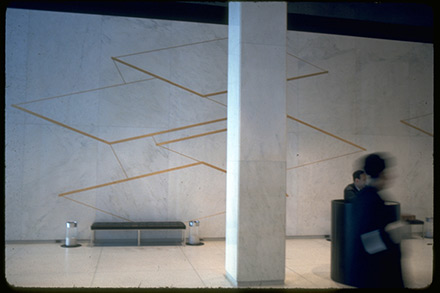
Figure 3: Josef Albers, Two Structural Constellations, 1959. Incised gold leaf on white Vermont marble, 488 x 1,859 cm. New York: Corning Glass Building, 717 Fifth Avenue. Copyright: The Josef and Anni Albers Foundation.
Notes
[The translator's
additions are indicated with
square brackets]
- [Damisch writes, ‘L’œil, le plus théorique de tous les sens.’ Marx writes, ‘Die Sinne sind daher unmittelbar in ihrer Praxis Theoretiker geworden.’ ‘The senses have therefore become directly in their practice theoreticians.’ Karl Marx, Economic and Philosophic Manuscripts of 1844, trans. by Martin Milligan, Moscow: Foreign Languages Publishing, 1959, 107.] [back to text]
- Sigmund Freud, letter to Ernest Jones, 8 February 1914, cited by Jones. Ernest Jones, Sigmund Freud: Life and Work, The Last Phase 1919–1939, London: Hogarth Press, 1957, 441. [Jones’ alteration of Freud’s English is indicated. See Sigmund Freud and Ernest Jones, The Complete Correspondence of Sigmund Freud and Ernest Jones, 1908–1939, ed. by R. Andrew Paskauskas, Cambridge MA: Belknap Press of Harvard University Press, 1993, 260–61. Freud writes, ‘In the Moses affair I am growing negative again, the last artist I consulted showed me what the way of artists in such matters is and made me afraid of too sharp an interpretation. Meaning is but little with these men, all they care is line, shape, agreement of contours. They are given up to the Lustprinzip. I prefer to be cautious.’] [back to text]
- [In English in the original.] [back to text]
- Josef Albers, Interaction of Color, New Haven and London: Yale University Press, 1971, 66. [Albers writes, ‘With the discovery that color is the most relative medium in art, and that its greatest excitement lies beyond rules and canons, a more sensitive discrimination was needed’—compared, that is, with the formal colour systems, theories, wheels, etc. that could be taught.] [back to text]
- Albers, Interaction of Color, 17. [Albers writes, ‘Usually a special effort in using disliked colors ends with our falling in love with them.’] [back to text]
- [In English in the original. Cf. Albers’ dictum, ‘we do not see what we see,’ which he tirelessly demonstrated by means of surprising colour interactions. Josef Albers, Search Versus Re-search, Hartford, CT: Trinity College Press, 1969, 21.] [back to text]
- Albers, Interaction of Color, xi. [back to text]
- [‘The origin of art: The discrepancy between physical fact and psychic effect.’ Albers, Search Versus Re-search, 10, from Albers’ formulation of the origin, content, measure and aim of art, apparently first composed c. 1940 (typescript in the archives of the Josef and Anni Albers Foundation with autograph date annotation) and published many times.] [back to text]
- Robert Le Ricolais, ‘Reflections on the Graphisms of Josef Albers’, Art International, 7: 3, 3 March 1968, 36. On Le Ricolais, see the catalogue of the exhibition Robert Le Ricolais, Espace Mouvement et Structures, Paris: Palais de la Découverte/Université de Paris, 1965). [G. Robert Le Ricolais (1894–1977), French architect and engineer; Professor of Architecture at the University of Pennsylvania, 1954–1977; noted for ‘space structures’. Albers appears to have been excited by Le Ricolais’ enthusiastic response to his drawings and had been urging him since they got to know each other in the mid-1950s to write something about his graphic works. It was Le Ricolais’ language rather than is his authority as a mathematician and engineer that made an impression on Albers: ‘Your poetic reactions of a connoisseur encourages [sic] me to ask you whether you would be interested in writing an article—short or long—about my “geometrics”’ (20 November 1963). The article Le Ricolais was eventually persuaded to write (in French) seems to have puzzled Albers somewhat with its ‘new vocabulary’ (9 July 1967). Le Ricolais offered Albers a little explanation of his references to semiology and topology: ‘I am afraid I indulged into [sic] a pedantic jargon—That is why I used the fashionable word “semiology” or science of sign—enigmatic science probably worse than graphology.’ Excusing his use of ‘the cryptic word “automorphism”’ Le Ricolais added, ‘The translation is perfect, I will never try again to be an amateur art critic—Dear Albers, I wish words would have the same eloquence and directness as your lines.’ (18 July 1967) Correspondence in the archive of the Josef and Anni Albers Foundation.] [back to text]
- [Henri Poincaré (1854–1912), French mathematician, credited, among his varied contributions to abstract and applied mathematics, with opening the field of algebraic topology; author of several influential popular books on mathematics and scientific method, published in the first decade of the twentieth century.] [back to text]
- 11 [According to the architect Georges-Henri Pingusson’s foreword to the exhibition catalogue (see note 9, above), Le Ricolais says, ‘research can’t be done by specialists, but by people who know what happens on the side’.] [back to text]
- Cf. Margit Rowell, ‘On Albers’ Color’, Art Forum, 10: 5, January 1972, 28. [back to text]
- [Pierre Rosenstiehl (1933–), French mathematician with a particular interest in topological graphs; colleague of Damisch’s at the École des Hautes Études en Sciences Sociales. The works by Albers to which Damisch refers are probably the ‘Mexican Lithographs’ (1939) and a series of drypoints and related drawings Albers made between 1940 and 1942. See Brenda Danilowitz, The Prints of Josef Albers: a Catalogue Raisonné, 1915–1976, New York: Hudson Hills Press, 2001, 68–73, cat. nos. 83–99.] [back to text]
- [Le Ricolais writes, ‘The Universe of Albers possesses a very characteristic topology. [...] The Albersian space is generally, therefore, an enclosed space, varying in typographic density but always having an orderly structure.’] [back to text]
- Going as far as to play, if need be, with the appearance of thickness that a thicker contour can give to a plane presented in axonometric perspective, as we see in Structural Constellations, which poses some interesting problems with the transfer of these figures onto a wall, at a large scale, as one can see in New York in the hall of the Corning Glass Building [1959, Fig. 3, above], and in the solutions adopted for this exhibition [Musée des Beaux Arts, Tourcoing, 1988] by Jean-Etienne and Thierry Grislain. [The adaptations of Structural Constellations inspired by Albers’ murals underlined the exhibition’s emphasis on Albers’ graphic works (‘constructions géométriques dans l’éspace’) rather than his paintings (‘la couleur et ses implications’, in the words of the curator).] [back to text]
- Le Ricolais, ‘Reflections’. [Le Ricolais sees in Albers’ work a phenomenon of ‘crystallisation’, which reminds him of a ‘fundamental principal of mathematics,’ and hence, ‘the appearance of the philosophical and almost universal search for the nucleus or basic cell which is the source of all becoming’.] [back to text]
- 17 Cf. Jaques Lacan, The Four Fundamental Concepts of Psychoanalysis, trans. by Alan Sheridan (London: Hogarth Press, 1977, 80–81. [Lacan says, ‘I apprehend the world in a perception that seems to concern the immanence of the I see myself seeing myself. The privilege of the subject seems to be established here from that bipolar reflexive relation by which, as soon as I perceive, my representations belong to me.’] [back to text]
- Josef Albers, Poems and Drawings, New Haven: The Readymade Press, 1958). [The English version of the line, printed alongside the German reads, ‘There is no world without a stage.’ In his note, Damisch adds a line from another of Albers’ poems, echoing the reference to Lacan:] ‘Meine Erde dient auch andern/meine Welt gehört nur mir.’ [My Earth serves also others/My world is mine alone.] [back to text]
- I can only mention here a remarkable variant on the motif of nested coloured squares to which the series ‘Homage to the Square’ led: it would have been enough for Josef Albers to have traced, starting from the corners of the central square, the diagonals which linked them to the corresponding corners of the other squares, for the strictly chromatic effect to interfere with a graphic [caractérisé] effect of volume. [Damisch may be referring to the ‘mitred’ squares (Fig. 4, below) or the ‘white line’ squares, see for example: Homage to the Square: Mitred (1962), Nicholas Fox Weber, Josef Albers: A Retrospective, New York: Solomon R. Guggenheim Foundation, 1988, 255, cat. no. 212, White Line Squares (1966) Danilowitz, The Prints of Josef Albers, 114–117, cat. nos. 171–172] [back to text]
- It is only recently that psychologists and physiologists have undertaken the study of complex phenomena, long familiar to artists, such as the production of a contour from the effect of the contrast in value or tone between two adjacent surfaces, as well as the way in which the contour affects the contrast between the surfaces which it separates. Cf. Floyd Ratliff, ‘Contour and Contrast’, Scientific American, 226: 6, June 1972, 90–101. [back to text]
- Ludwig Wittgenstein, Remarks on Colour, trans. by Linda L. McAlister and Margarete Schättle, Oxford: Basil Blackwell, 1977, 10. [Wittgenstein’s 1951 manuscript speculates on producing ‘a colour sample (a rectangular piece of paper of this colour)’ (§59), and on ‘a painting cut up into small almost monochromatic bits’ (§60).] [back to text]
- [Cf. Hubert Damisch, ‘La géometrie de la couleur’ in: Cézanne ou la peinture en jeu, Limoges: Criterion, 1982, 29–49: a talk in which Damisch hints at what ‘the geometry of colour’ might mean in a Cézannian sense, in the light of Albers’ work on colour.] [back to text]
- [Cf. the question of Damisch’s magnum opus, and its unwritten sequel: ‘What is thinking in painting, in forms and through means proper to it? And what are the implications of such “thinking” for the history of thought in general?’ Hubert Damisch, The Origin of Perspective, trans. by John Goodman, Cambridge MA and London: MIT Press, 1994, 446 (originally published a year before the present article).] [back to text]
- [See Albers, Interaction of Color, 72–73: ‘Because of the after-image (the simultaneous contrast), colors influence and change each other forth and back. They continuously interact—in our perception.’] [back to text]
- ‘There is no such thing as phenomenology, but there are indeed phenomenological problems.’ Wittgenstein, Remarks on Colour, §58, 9. On ‘mental experience’ or imaginary experience in connection with colour perception, cf.Albers, Interaction of Color, 24 [Albers describes an exercise of imagining colour mixtures and producing ‘illusionary’ mixtures by arranging coloured swatches of paper]; Wittgenstein, Remarks on Colour, §8, 3 [Wittgenstein speculates on people whose ‘language games might only have to do with looking for or selecting already existing intermediary or blended colours’—precisely the exercise Albers describes]; and Maurice Merleau-Ponty, Phenomenology of Perception, trans. by Colin Smith, London: Routledge & Kegan Paul, 1962, 4 (‘An isolated datum of perception is inconceivable, at least if we try to perceive it mentally.’) [back to text]
- Albers, Interaction of Color, 30–31. [Albers’ diagram suggests a way of calibrating the distance between colours, of locating their imagined mixture spatially.] [back to text]
- [Cf. the theory of ‘aerial’ perspective from Leonardo to Cézanne.] [back to text]
- ‘[Phenomena, in effect, ought to offer us, in their very diversity, a sort of realisation of the unity of thought and this unity can only be realised in a homogenous diversity, which would be, so to speak, a potential one, like that of time and space. Secondary qualities form, on the contrary, a heterogeneous diversity, which in it self has nothing in common with that of time and space for] colour is only accidentally extended and one cannot say that it increases or diminishes when the surface it covers becomes larger or smaller.’ Jules Lachelier, Du fondement de l’induction, Paris: Libraire Philosophique de Ladrange, 1871, 56–57 [expanded quotation]. [back to text]
- In accordance with the recent translation, Freud's ‘Drang’ (‘poussée’ in the French) is rendered as ‘pressure’. See Sigmund Freud, ‘The Drives and their Fates’, trans. by Graham Frankland, in: The Unconscious, London: Penguin, 2005, 13–31. (‘Triebe und Triebschicksale’, 1915). [back to text]
- [Cf. Albers, Interaction of Color, 70: ‘a drive, or better, need for being productive, creative’.] [back to text]
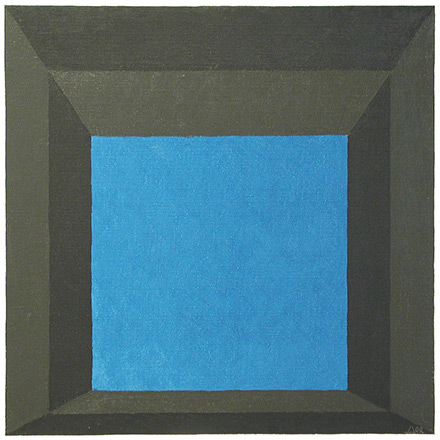
Figure 4: Josef Albers, Homage to the Square: Somber Promise I, 1969. Oil on Masonite, signed and dated lower right ‘A69’, 61 x 61 cm. New Haven, CT: Yale University Art Gallery. Copyright: The Josef and Anni Albers Foundation (1976.1.615).
|
|
|
|
|
|
